


NDIS Tracheostomy Care | Maple Community Services

Tracheostomy Care for NDIS Participants

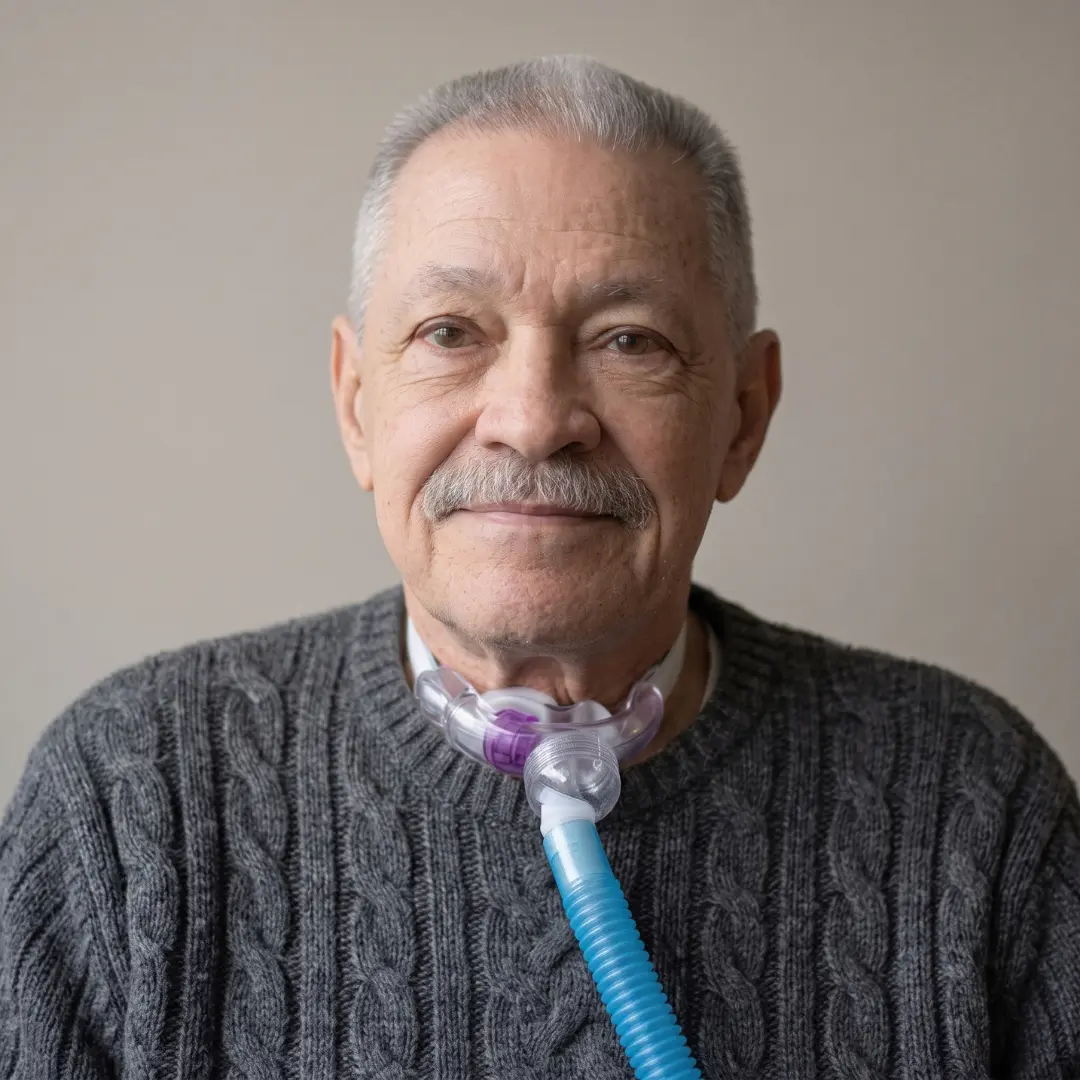
NDIS tracheostomy care is delivered at home and in supported accommodation by workers trained on your specific tube, with registered nurse oversight behind every shift.

Maple delivers tracheostomy support in the family home, in the community and in supported accommodation. Every worker is trained and assessed against the NDIS Quality and Safeguards Commission high intensity support skills descriptors, on that participant’s specific tube and routine, before their first solo shift. A registered nurse holds clinical accountability for the plan, the training and the escalation pathway.

You do not have to become your family member’s nurse. Whether you are a participant, a family carer, a Support Coordinator or a hospital discharge planner, we can help you get safe support in place.

Trusted NDIS Registered Specialists

8,000+

Happy Participants Supported

10+ Years

Delivering
NDIS Services

50+

Languages to Make You Feel at Home

24/7

Support and Same Day Booking

Why choose Maple for Tracheostomy Care

Find tracheostomy care and support that works for you.

1

I am an NDIS Participant

I want independence, choice, and a team that knows my name

2

I am a Family / Carer

I need a trusted partner to share the load and provide peace of mind

3

I am Support Coordinator

I need a responsive partner for everyday support and complex, high-need referrals

Who Can We Help?

We support participants whose airway needs go beyond what a standard support worker can safely manage, with care shaped around the clinical plan, the daily routine and the person.

People living at home with a tracheostomy

Rostered support from a few hours a day to around the clock, delivered by workers trained on that specific tube, circuit and routine.

People coming home from hospital

Working with discharge planners and hospital social workers so worker training and competency sign-off happen before discharge day, not after.

People on ventilation

Supporting participants who need a ventilator and airway management alongside tracheostomy care, with registered nurse oversight.

People with a tracheostomy alongside other high-intensity supports

Coordinating tracheostomy care with enteral feeding, complex bowel care, epilepsy and seizure support or complex wound care, so one team covers the whole picture.

People whose current provider cannot staff it safely

Tie and dressing changes require two trained workers on site. If your provider can only ever send one person, that task cannot be completed safely.

Children and young people

Working alongside families, schools and treating teams so the routine stays consistent across every setting.

Wherever you are in your NDIS journey, our behaviour support is designed to be safe, consistent and built around what matters most to you and your family.

What Our Clients Are Saying

What Does Our Tracheostomy Care Involve?

Stoma and skin care

Daily checks of the opening and the skin under the flange for redness, swelling, moisture or breakdown, and monitoring of secretion colour, smell and volume as an early warning of infection.

Inner cannula care

Cleaning or replacing the inner cannula to the frequency the plan sets, and more often when secretions increase. This is the main defence against a blocked tube.

Dressing and tracheostomy tie changes

Dressings changed as soon as they are damp or soiled. Tie changes are always delivered by two trained workers on site, as the NDIS high intensity support skills descriptors require.

Suctioning

Airway clearance on clinical signs rather than a fixed schedule, delivered by workers assessed as competent for that participant.

Humidification

Fitting and replacing the heat and moisture exchanger, or running the humidifier, so secretions stay thin enough to clear.

Emergency response

Workers trained to the participant's own emergency plan for tube blockage, respiratory distress and accidental decannulation, with the spare tube and obturator kept with the person.

Registered nurse oversight

Clinical assessment, contribution to the support plan with the treating team, worker training and competency sign-off, and review of the daily records.

Documentation and reporting

Daily records of suctioning frequency, secretion appearance and skin condition, used clinically and supplied as evidence at plan review.

Coordination with the treating team

Working with the respiratory physician, ENT specialist, community nursing, speech pathology and the hospital, so nothing falls between services.

How to Get Started with Maple

Step 1

Reach out

Send us a message or give us a call. We are here to listen.

Step 3

We Find the Right Fit

Our team matches you with the right support and people who suit you best.

Step 2

Tell Us About You

We will have a relaxed chat to understand your needs, goals, and what matters most to you.

Step 4

Start Your Journey

We set everything up so you can begin with confidence, knowing you are supported every step of the way.

How Maple Community compares

Why Maple is Different

Other
Providers

Care That Speaks Your Language

80% CALD workforce, 50+ languages spoken, support worker matching

✓ ✕

500+ Support Workers and Registered Nurses Ready*

Immediate support, no more waiting for weeks

✓ ✕

96% Support Worker Retention vs 78% Industry Average

Same support team, real and long-term relationships

✓ ✕

Dedicated Relationship Contact

One caseworker, direct mobile and email access

✓ ✕

Supported Independent Living Placement Within 24 Hours*

A smooth, supported process to make you feel at home

✓ ✕

Referral Acknowledged Within 2 Hours

Immediate confirmation, never waiting in the dark

✓ ✕

Expertise in Complex & High-Needs Care

Specialists in HIDPA, psychosocial and medical cases

✓ ✕

24/7 Real Person Support Line

Call any time and speak to a real person

✓ ✕

Built-In Escalation Pathways

Direct access when urgent issues arise

✓ ✕

Reporting You Can Count On

No chasing and no documentation gaps

✓ ✕

Stable Provider for Every Stage of Your NDIS Journey

10+ years of stable NDIS delivery across Australia

✓ ✕

1,000+ happy homes filled

How Can We Help You?

Core Supports

Everyday personal care and daily living support delivered by the same team that handles the tracheostomy, so the clinical tasks and the ordinary parts of the day are not split across two providers.

Support Coordination

Help to navigate the NDIS, gather the specialist evidence needed for High Intensity Daily Personal Activities funding, and coordinate nurses, allied health and equipment into one plan.

Accommodation

Supported Independent Living (SIL) and Specialist Disability Accommodation (SDA) with tracheostomy support built into the roster from the start.

Specialised Nursing Care

Wound care, catheter and continence support, medication management, enteral feeding and complex bowel care, delivered alongside tracheostomy support by the same clinical team.

We service all suburbs across Sydney and other key cities across Australia:

  • Sydney

  • Melbourne

  • Brisbane

  • Gold Coast

  • Perth

  • Orange
  • Bathurst
  • Dubbo
  • Central Coast
  • Wollongong
  • Sunshine Coast
  • Geelong

Enquire Today

Whether its a query about the services we provide, or just a general enquiry, we would love to hear from you!


    Your Questions, Answered

    Yes. Tracheostomy support is one of the high-intensity supports we deliver, at home, in the community and in supported accommodation. Every worker is trained and assessed as competent against the NDIS high -intensity support skills descriptors on that participant’s specific tube, with registered nurse oversight behind them.

    Both, in different roles. Trained support workers deliver most day-to-day care. A registered nurse assesses the person, contributes to the plan with your treating team, trains and signs off each worker, reviews the records and handles escalation. Full nursing shifts are used where a ventilator is involved or the tracheostomy is new.

    That is the aim, and with a tracheostomy it matters more than with most supports. Competency is assessed person by person and the NDIS Commission recommends reassessment after three months without delivering the support. The Australian disability sector runs an average annual turnover of 17% to 25%. Maple holds a retention rate of 96%, with annual turnover under 4%.

    Yes. The skills descriptors require a second trained worker to be available for tracheostomy dressing and tie changes. We roster for it rather than treating it as an exception.

    We acknowledge referrals within two hours during business hours, and we average five business days from referral to service commencement. Where worker training and competency sign-off are needed first, we build that into the start date rather than skipping it. Engage us before discharge day wherever possible.

    Around 80% of our workforce comes from culturally and linguistically diverse backgrounds, and we speak more than 50 languages between us. With an airway, emergency instructions have to make sense the first time, so we match on language wherever we can.

    Tracheostomy care at home covers stoma and skin checks, inner cannula cleaning or replacement, dressing and tie changes, humidification, suctioning when clinical signs call for it, and documentation. A health practitioner writes and oversees the plan that sets the detail.

    Yes, once an appropriately qualified health practitioner has trained them and assessed them as competent, and they are working to a plan that the practitioner oversees. Competency is specific to the individual participant and does not transfer between people.

    Only if they choose to. Family carers who want to be hands-on should be trained by an appropriately qualified health practitioner and formally assessed before doing the task independently. The NDIS can fund that training through Capacity Building.

    The NDIS Practice Standards skills descriptors require a second worker to be available to replace tracheostomy dressings or ties. One person secures the tube while the other changes the strap, reducing the risk of the tube being dislodged while it is unsecured.

    The NDIS funds tracheostomy support as High Intensity Daily Personal Activities, within the Core Supports budget. Funding follows assessed need, so evidence from the treating specialist team about the level and frequency of support required should be provided at planning or plan review.

    Yes, where it is assessed as needed. Overnight support is funded either as active support, where a worker stays awake and attends through the night, or as a sleepover. The evidence needs to reflect how often the person actually requires attention after hours

    Specialist reports rather than general letters. Ask the respiratory physician, ENT specialist, treating nurse or GP to describe the tracheostomy, the suctioning frequency, the risks and the level of trained supervision required, with frequency stated in numbers.

    Most tracheostomy support is delivered by trained support workers with nurse oversight behind them. Full nursing shifts are used where a ventilator is involved, where the tracheostomy is new or unstable, or where the treating team assesses the risk as high.