

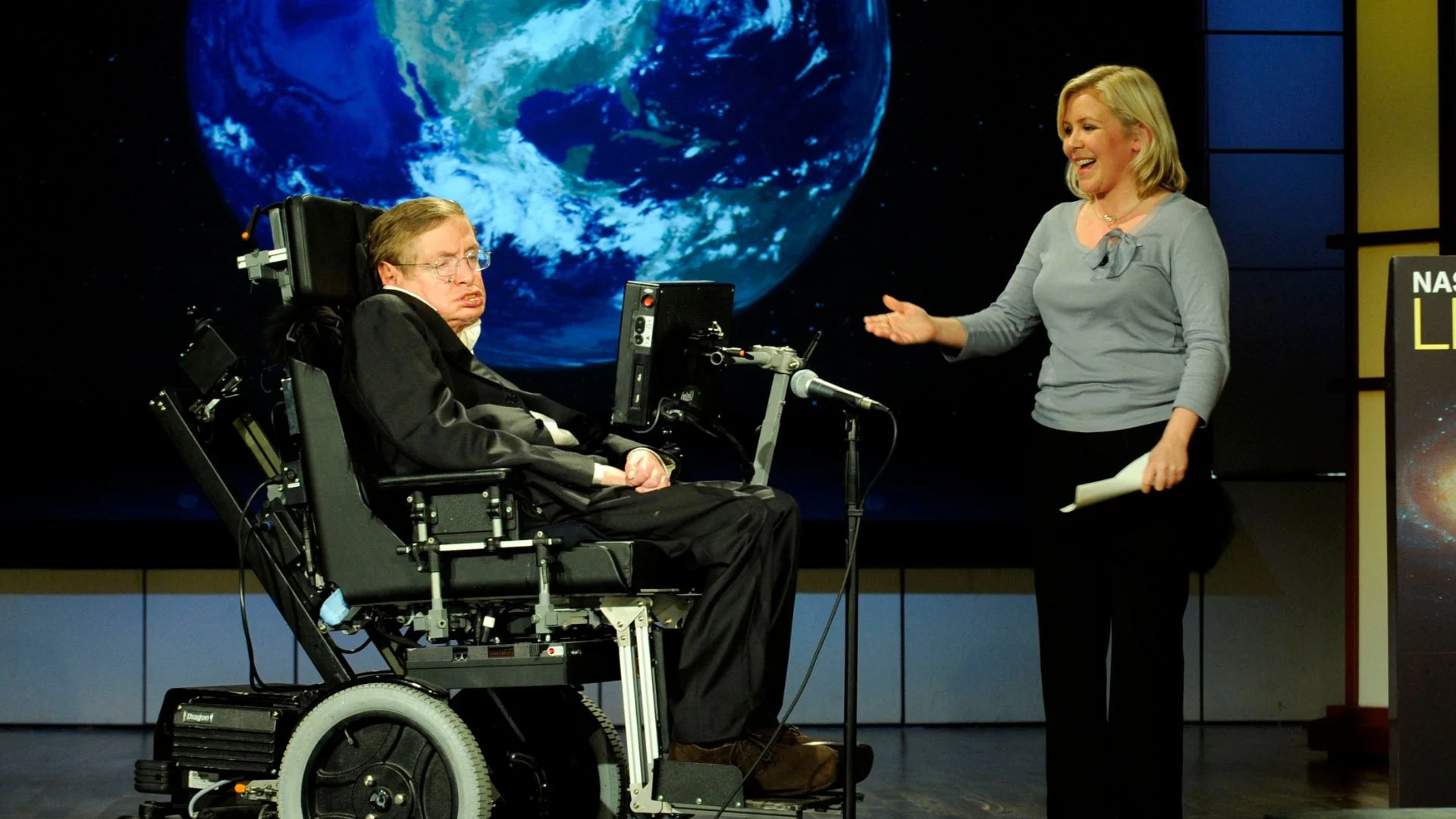
What We Can Learn from Stephen Hawking’s Life with MND (ALS)
When we think of Stephen Hawking, we often picture the brilliant physicist who unlocked secrets of the universe. But for millions of people living with disability, his story offers something even more powerful. Hawking showed the world that disability doesn’t define potential.
Diagnosed with amyotrophic lateral sclerosis (ALS) at age 21 and told he had just a few years to live, Stephen Hawking defied the odds. He went on to live (and thrive) for more than five decades, becoming one of the most celebrated scientists of our time. Through resilience, innovation, and unwavering curiosity, he left a legacy that extends far beyond science. He proved what’s possible when people receive the right support.
Understanding ALS (Motor Neurone Disease)
In Australia, we refer to ALS as Motor Neurone Disease (MND). This condition gradually damages the nerves that control voluntary muscle movement. It affects mobility, speech, swallowing, and eventually breathing. However, it rarely affects a person’s mind.
People living with ALS often rely on a range of supports, such as:
-
Assistive technology like speech devices and power wheelchairs
-
Daily personal care and in-home assistance
-
Complex care or high-intensity nursing supports
-
Home modifications for safety and independence
Stephen Hawking’s life reminds us that even with a severe physical disability, people can lead rich, intellectual, emotional, and social lives when they have the right tools and care in place.
5 Lessons We Can Learn from Stephen Hawking’s Life with Disability
1. Adaptation Opens Doors
As ALS limited Hawking’s ability to speak and move, he leaned into technology to continue teaching, researching, and inspiring. His speech device became iconic. It wasn’t just as a tool for communication, it became a symbol of innovation in disability support.
Today, countless Australians use assistive technologies through the NDIS, from voice output communication aids (VOCAs) to environmental control systems. These tools empower people to live independently, engage with the world, and express themselves fully.
2. Disability Doesn’t Diminish Intelligence or Impact
Hawking’s body may have weakened, but his intellect never faltered. He wrote bestsellers, delivered lectures around the world, and made groundbreaking discoveries. All while living with what many would consider high physical support needs.
His story challenges society’s assumptions about ability. It reminds us to focus not on limitations, but on what someone can achieve with the right mindset and environment.
3. Support Systems Make All the Difference
Hawking’s success wasn’t a solo journey. He relied on a strong network of family, carers, nurses, and support staff, alongside adaptive equipment. Their care gave him the freedom to live independently and pursue his passions.
Here in Australia, the NDIS exists to do just that. The system provides funding for tailored, person-centred supports that help people live safely, confidently, and with purpose.
4. Inclusion Drives Innovation
Hawking didn’t wait for society to “make space” for him. He took centre stage in universities, on television, in documentaries, and even in pop culture. He didn’t just normalise disability in public life, he made it powerful.
When we empower people with disability to participate fully in work, education, and community life, we unlock creativity and innovation that benefits everyone.
5. Humour, Humanity, and Hope Matter
Stephen Hawking was more than a scientist. He was funny, warm, and deeply human. He made cameo appearances on shows like The Big Bang Theory and The Simpsons, showing the world that disability and personality go hand in hand.
His story reminds us that behind every diagnosis is a person with the potential to achieve greatness. Disability doesn’t cancel out any of that.
Disability Support Today: Continuing the Legacy
If you’re navigating a progressive physical condition like MND (or ALS), the NDIS can provide critical support services to help you live on your own terms.
You may be eligible for:
-
High Intensity Daily Personal Activities
-
24/7 Complex Care
-
Assistive technologies and home modifications
-
Support Coordination and Plan Management
-
Community participation and social connection supports
With a personalised plan, these services can empower you, or someone you care for, to maintain independence, safety, and a strong sense of self.
Let’s Redefine What’s Possible
Stephen Hawking’s life proves that brilliance, joy, and contribution don’t end with a diagnosis. They evolve. With the right supports, people can continue to dream big, connect deeply, and leave their mark on the world.
If you or someone you love is navigating disability, we’re here to walk alongside you, with compassion, creativity, and care.
Let’s build a support plan that honours your whole potential. Get in touch with our team today.
