

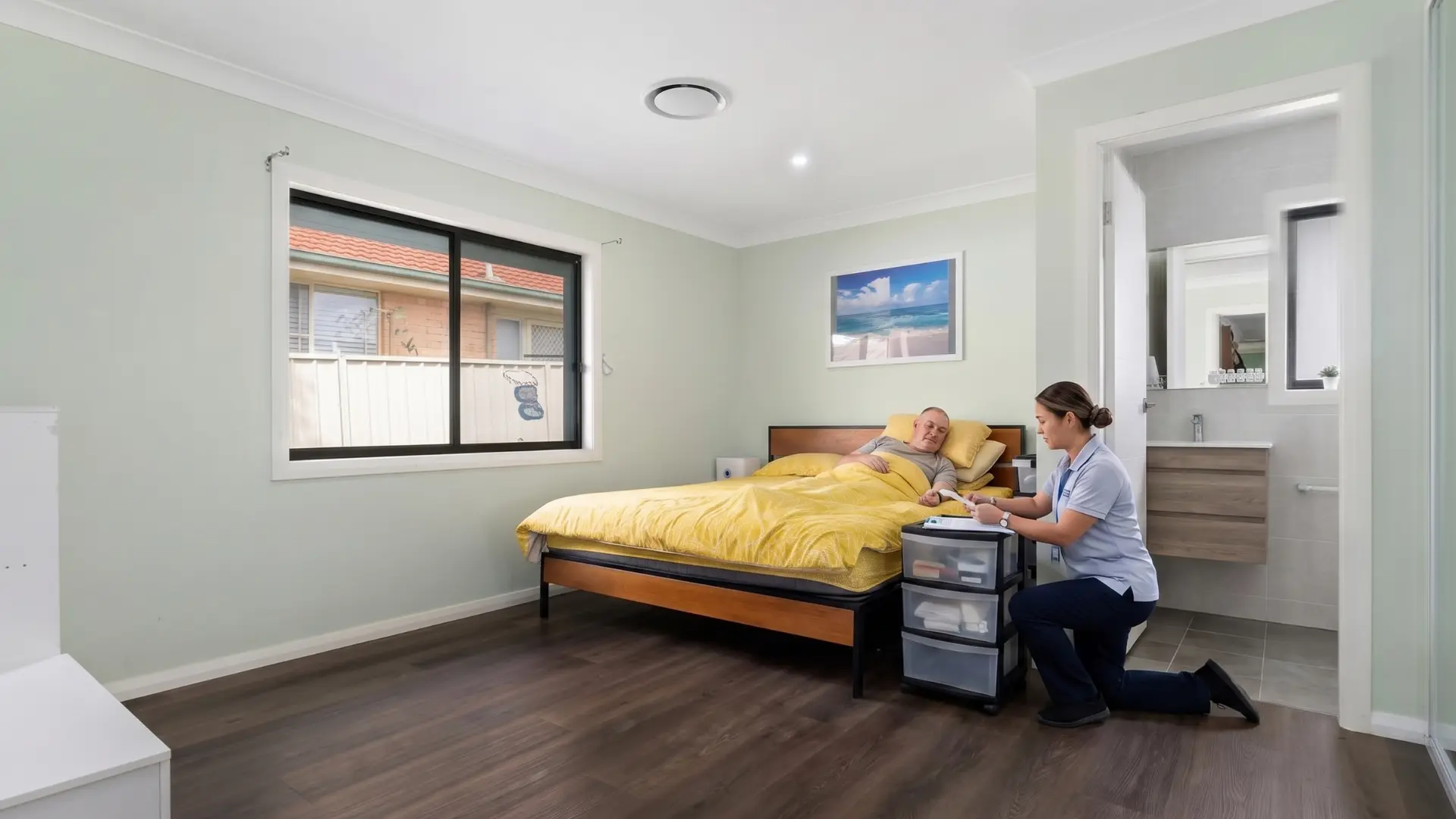
What is SIL and Who is it For?
Supported Independent Living (SIL) is one of those terms that gets thrown around a lot in the NDIS space, but rarely explained in a way that actually makes sense.
Most people don’t start by searching “what is SIL NDIS”.
They’re usually asking something else entirely.
They’re asking:
- “How can I live more independently?”
- “What support is available at home?”
- “Is there somewhere safe where I can live with support?”
SIL often sits behind those questions.
At its simplest, SIL is about having the right level of support around you so you can live your life, in your home, your way.
What SIL Actually Means
Supported Independent Living is a type of funded support under the NDIS that helps people with disability with day-to-day living.
That support typically happens in the home. For some people, that’s a shared home with others. For others, it might be a more individual setup depending on their needs.
What matters isn’t the structure of the house.
It’s the structure of the support.
SIL can include things like:
- Help getting ready in the morning or winding down at night
- Support with cooking, cleaning, and general household tasks
- Assistance with personal care
- Medication support
- Building skills to manage daily life more independently
It’s not about doing everything for someone.
It’s about supporting someone to do as much as they can, while stepping in where needed.
That balance is where good SIL support lives.
It’s More Than Just Housing
One of the biggest misconceptions is that SIL is a housing solution.
It’s not.
SIL doesn’t pay for the bricks and mortar. It funds the support that happens inside the home.
That’s an important distinction, because it shifts the focus.
You’re not choosing SIL because of the house.
You’re choosing it because of the lifestyle it enables.
A good SIL setup should feel like a home first, not a service.
The routines, the environment, the people around you — all of that plays a role in how it feels day to day.
The right support can turn a house into somewhere stable, predictable, and comfortable.
The wrong support can do the opposite, even in the nicest property.
Who SIL is For
SIL is generally suited to people who need regular, ongoing support in their daily lives.
That might look different for everyone, but it often includes people who:
- Need support across most days (or all day)
- Require overnight or 24/7 assistance
- Are building skills to live more independently over time
- Can’t safely live alone without support in place
Sometimes it’s a gradual step.
Someone might move into SIL after living with family, when that arrangement is no longer sustainable.
Other times, it’s part of a longer-term plan to create more independence and routine.
There’s no single “type” of person who fits SIL.
It’s less about a label, and more about whether the level of support will make everyday life safer, easier, and more consistent.
What SIL Looks Like Day to Day
There’s no one version of a “typical” day in SIL, which is exactly the point.
Some people like structure. Others prefer flexibility.
For one person, support might mean help getting ready for work or a day program, followed by a quiet evening at home.
For someone else, it might involve community access, appointments, social activities, or building new skills around cooking or budgeting.
Good SIL support adapts to the person, not the other way around.
Over time, you’ll often see:
- More confidence in daily routines
- Increased independence with tasks
- Greater stability in behaviour and wellbeing
- Stronger relationships with consistent support workers
Those changes don’t usually happen overnight.
They come from consistency.
How SIL Gets Funded
SIL is funded through an NDIS plan, but it’s not automatically included.
To receive SIL funding, there needs to be clear evidence that:
- A person requires a high level of support at home
- The support is reasonable and necessary
- Other, lower levels of support wouldn’t be enough
This process often involves input from:
- Support Coordinators
- Occupational Therapists or other allied health professionals
- Family members or informal supports
Assessments and reports help build the case for why SIL is the right fit.
It’s not always a quick process, but when it’s done properly, it leads to a setup that actually works long-term.
How to Know if SIL is Right for You
There isn’t a single checklist, but there are usually some clear signs.
SIL might be worth exploring if:
- Daily tasks feel overwhelming without support
- Living arrangements are becoming unsafe or unstable
- There’s a need for more routine and structure
- Independence is the goal, but extra support is needed to get there
For families, it can also be about sustainability.
There comes a point where informal supports can’t carry everything on their own.
SIL can provide a more structured, consistent environment that supports both the participant and the people around them.
Choosing the Right SIL Setup
Not all SIL is the same.
The difference between a good experience and a frustrating one often comes down to:
- The quality and consistency of support workers
- How well the service understands the individual
- The culture of the home
- How flexible and responsive the support is
It’s worth taking the time to get this right.
Tours, conversations, and asking direct questions all help.
You’re not just choosing a provider — you’re choosing the environment someone will live in every day.
Support That Fits Your Life
At its core, SIL isn’t about services, funding categories, or NDIS terminology.
It’s about everyday life.
It’s about waking up in a place that feels stable.
Knowing the people around you.
Having support there when you need it, and space when you don’t.
When it’s set up well, SIL creates the kind of environment where independence actually grows.
Not all at once.
But steadily, over time.
And that’s where it makes the biggest difference.
At Maple, we believe the best support doesn’t feel like a service — it feels like part of your everyday. Through Everyday with Maple, we focus on showing up consistently, understanding what matters to you, and supporting you in a way that actually makes day-to-day life easier.