
The Role of Technology in High-Intensity NDIS Support
Technology plays a significant role in our daily lives, shaping the way we communicate, access information, and stay connected with others. But for people with high support needs, it can be more than just convenient, it can be life-changing. In the world of High-Intensity NDIS Support, technology plays a vital role in enhancing safety, improving health outcomes, building independence, and reducing the strain on both participants and support teams.
From remote monitoring to assistive devices and clinical care tools, this blog explores how technology is shaping the future of complex care in the NDIS. And, we explore how the right provider can help you access and benefit from it.
How Technology Supports High-Intensity NDIS Participants
Technology can’t replace human care, but it presents the opportunity to enhance it. It gives participants greater control over their lives, helps support workers deliver safer, more efficient care, and supports real-time decision-making by clinical teams.
Here’s how it’s making a difference:
1. Assistive and Monitoring Technology
Designed to help participants with high support needs carry out daily activities more independently, while allowing caregivers to monitor health and wellbeing discreetly and efficiently. These tools include everything from seizure detectors to smart home devices, all working behind the scenes to reduce risk and enhance autonomy.
Examples:
- Smart sensors that detect seizures, incontinence, or changes in body position
- Fall detection systems that send automatic alerts
- Environmental control units (ECUs) that let participants control lights, doors, and temperature using switches or voice
- Remote health monitoring (e.g. blood glucose, oxygen levels, heart rate)
Impact:
These tools reduce the need for 24/7 human surveillance while improving response times in emergencies. For families, it offers peace of mind. For providers, it ensures care is proactive, not reactive.
2. Clinical Decision Support Systems
These digital tools help support NDIS providers in making informed and accurate decisions in complex care settings. They streamline care delivery through documentation, alerts, and protocols, helping ensure that every action aligns with best practice, clinical requirements, and NDIS compliance standards.
Examples:
- Digital care plans and checklists
- Medication administration records (eMAR)
- Wound tracking software
- Real-time incident reporting and alerts
Impact:
These systems improve the accuracy of delivering HIDPA or complex care, reduce human error, and ensure that staff follow best-practice protocols. They also provide valuable data to guide NDIS plan reviews and clinical oversight.
3. Telehealth and Virtual Consults
In complex care, access to allied health professionals and specialists is essential, but not always easy, especially in rural or remote areas. Telehealth solutions use secure video and communication platforms to connect participants with therapists, nurses, and behavioural specialists in real time. It breaks down barriers to care, shortens wait times, and ensures participants receive expert guidance, no matter where they live.
Examples:
- Online behaviour support consults
- Speech therapy via video
- Remote nurse training and supervision
- Family involvement through video conferencing
Impact:
Participants in regional or remote areas can receive timely, expert support. This is especially important for behavioural or psychosocial needs where regular oversight is essential.
4. Communication Tools for Non-Verbal Participants
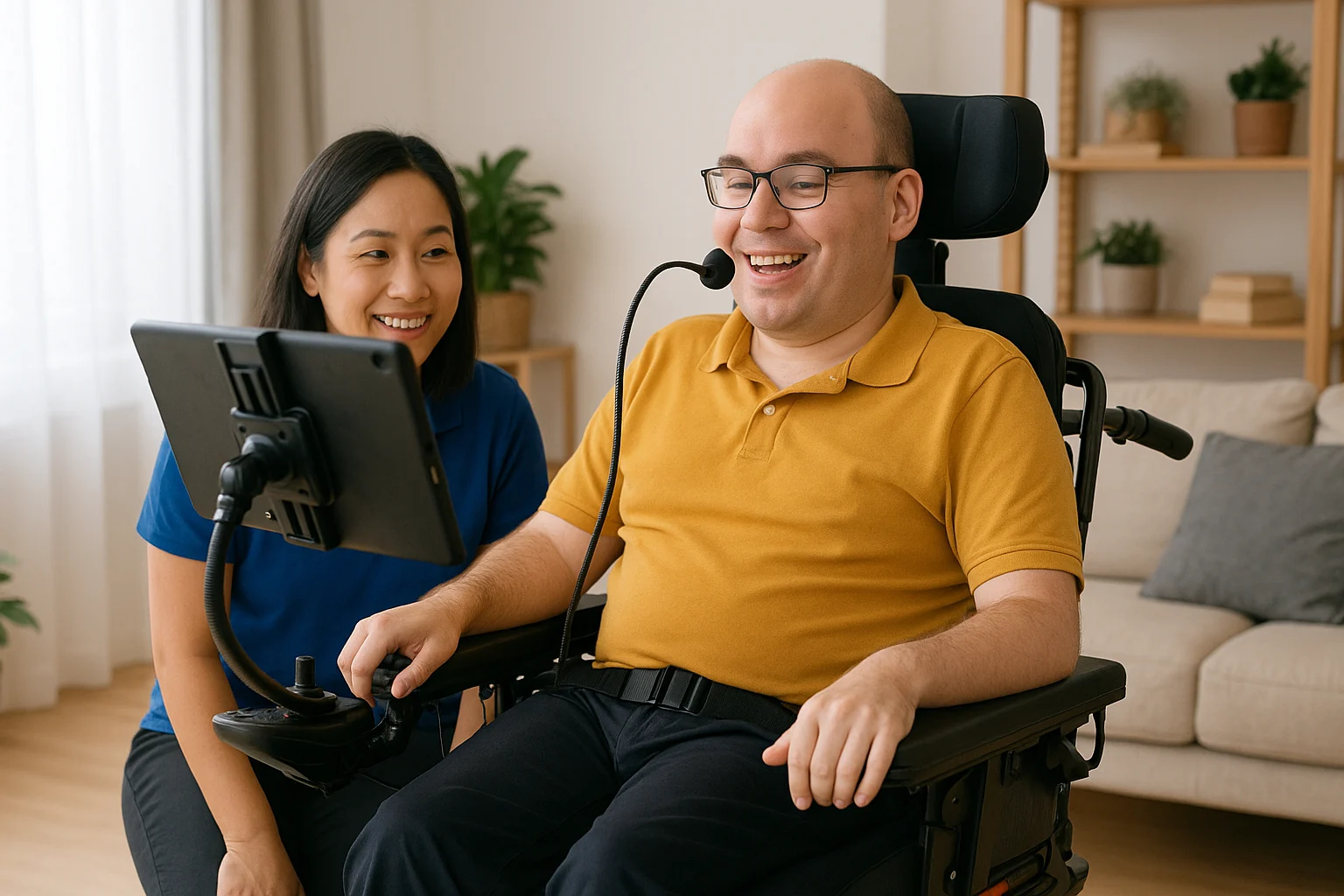
For participants who are non-verbal or have limited speech, traditional communication can be a barrier to independence, safety, and connection. Communication technologies, such as AAC devices and speech-generating apps, open up new pathways for self-expression. These tools are essential in high-intensity support environments, helping individuals express needs, make choices, and participate more fully in daily life.
Examples:
- Augmentative and Alternative Communication (AAC) devices
- Eye-gaze and touch screen communication boards
- Voice output apps for tablets or speech-generating devices
Impact:
Communication aids give participants a voice, reduce frustration, improve relationships, and enable them to advocate for their own care needs.
5. Training and Upskilling Support Workers
Quality care begins with confident, well-trained support staff. As participant needs grow more complex, providers are turning to technology to train and upskill their workforce. From online certification platforms to immersive simulations and mobile learning tools, technology ensures support workers stay current with procedures, clinical protocols, and best-practice care.
Examples:
- Online learning platforms for HIDPA certifications
- Simulation training using VR or video modules
- Mobile apps for clinical procedure refreshers
Impact:
When staff are better trained and supported, care quality improves, especially in high-pressure or emergency situations.
Challenges and Considerations
While the role of technology in complex care is growing, it must be used thoughtfully and with care. Some key considerations include:
- NDIS funding limitations: Not all technologies are funded under the NDIS unless they are considered “reasonable and necessary”
- Privacy and dignity: Monitoring systems must be implemented ethically and respectfully, with full consent by the participant
- Digital literacy: Participants and families may need training and support to use technology confidently
- Connectivity: Some tech relies on internet or power access, which can be a barrier in rural or lower-income settings
A good provider will ensure that technology is welcomed by the participant, and their wider support network. They will make sure it focuses on you and respects your rights. Without replacing human connect, but becoming an extension of it.
Funding Technology Through the NDIS
Technology can be funded through various categories in your NDIS plan, including:
- Assistive Technology (Capital Supports) – for communication devices, seizure monitors, environmental controls, etc.
- Core Supports – for consumables like continence tech or simple aids
- Improved Daily Living (Capacity Building) – for training in using the technology or therapy support
- High-Intensity Daily Personal Activities (Core) – where tech is needed to safely deliver complex care
Technology That Supports, Not Replaces
It not about replacing people, it’s about enhancing high-Intensity NDIS support. And enabling better care, greater independence, and more dignity. Whether it’s a sensor that prevents falls, an app that helps manage medications, or a device that lets you say what you need. The right technology, in the right hands, can change everything.
As the NDIS continues to evolve, so too will the role of technology. But what will never change is the need for care that is human-first, person-centred, and truly inclusive.
Want to learn more about technology in your NDIS plan?
Reach out to Maple Community Services today to speak with our team about High-Intensity Supports and the assistive technologies that could make a real difference in your life.
