

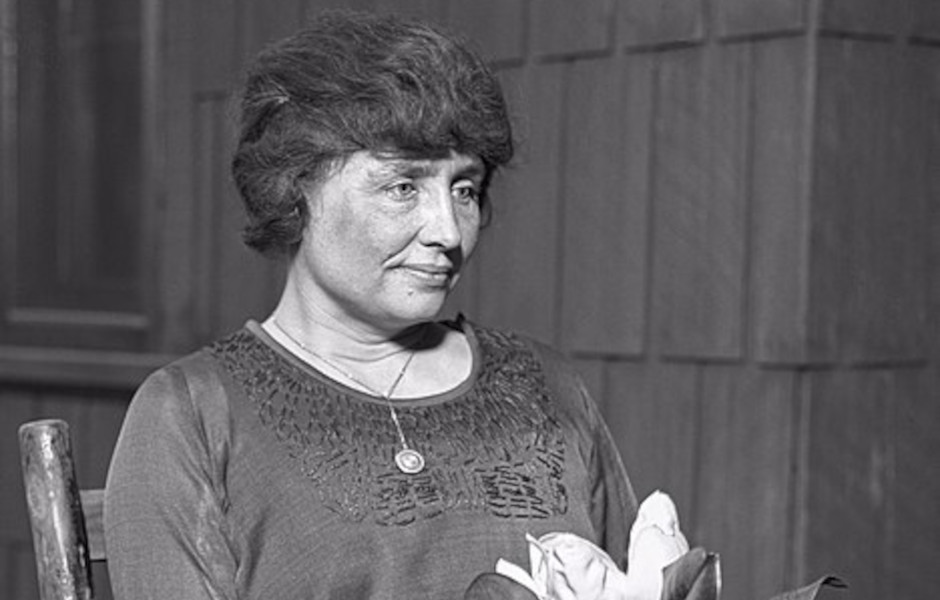
Famous People with Disabilities
Being a disabled person does not mean you can’t accomplish great things. Many famous people with disabilities have proven that strength, talent, and determination can overcome even the toughest challenges.
From artists and scientists to world leaders and entertainers, these famous disabled people have shaped history and inspired millions around the world.
It’s easy to forget that even the most celebrated icons face personal struggles. But everyone has their own story and journey, and many disabled people continue to redefine what’s possible through perseverance and creativity.
There are many famous people with disabilities who have lived with disabilities such as Frida Kahlo and Franklin D. Roosevelt who both had polio, Robin Williams who was diagnosed with Lewy body disease, Elton John who lives with epilepsy, and Helen Keller who was blind and deaf from 19 months old.
Whether or not a person is famous, every individual has inherent worth. Living with a disability does not define one’s value and as these stories show, many disabled people continue to make lasting contributions to the world. Some of these individuals may have found support from a trusted NDIS Provider or have thrived with supported independent living NDIS services.
What are the 7 Types of Disability?
Disability is a broad term that covers many conditions that affect how a disabled person experiences daily life.
The general term ‘disability’ refers to a condition, whether it be physical, sensory, cognitive, intellectual, mental, or various other types of chronic disease, that reduces a person’s ability to carry out their day to day activities. A disability could fall under any of the following categories:
- Mobility and physical impairments – whether someone is born with mobility or physical impairment or something that has been acquired with age. This also includes broken bones that incapacitate a person.
- Spinal cord disabilities – a complete (total dysfunction of sensory and/or motor organs) or incomplete (messages conveyed by the spinal cord are not totally lost) spinal injury. Impairments are mostly acquired from severe accidents that can lead to lifelong disabilities.
- Head injury disability – ranging from mild, moderate, and severe, there are two main types of brain injury, acquired brain injury (ABI) and traumatic brain injury (TBI), which could cause cognitive or motor degeneration or emotional dysfunction of the brain.
- Visual disability – There is a wide spectrum of visual impairments from mild to full blindness. This could have been present from birth or something acquired over time from aging, a chronic illness, injury, or infection.
- Hearing disability – This also encompasses a wide spectrum of impairments ranging from unilaterally, partial to bilaterally completely deaf. This also may have been present at birth or something acquired over time from normal aging, chronic illness, injury, or infection.
- Cognitive or learning disability – This may include forms of dyslexia or other learning difficulties, and it also includes speech disorders.
- Psychological – Impairments that affect the mood or feeling states, they can either be short or long term, and include mental health impairments or mental health illness.
Historical Figures with Disabilities
Throughout history, many remarkable famous disabled people have made a global impact. Some of them are:
Helen Keller
Helen Keller was an American author, disabilities rights advocate, political activist, lecturer, and possibly one of the best known icons of people living with disabilities. Keller was born in 1880 and lost her sight and hearing after a bout of illness which may have been meningitis, influenza, rubella or scarlet fever at nineteen months of age.
At the age of seven, she met Anne Sullivan, who became her lifelong companion. Sullivan taught her language through a series of different methods such as spelling words on Keller’s hand and learning other people’s speech using the Tadoma method.
Keller was the first deafblind person to earn a bachelor’s degree from Harvard University and worked for the American Foundation for the Blind which saw her tour 35 different countries advocating for those with vision loss. She was also a prolific author having written 14 books and hundreds of speeches and essays. Keller campaigned for those with disabilities, for women’s suffrage, labor rights, and world peace.
She joined the Socialist Party of America in 1909. Her autobiography, The Story of My Life became adaptations for film and stage and brought her and Sullivan to fame. Her birthplace is now a museum, her birthday recognised in the State of Pennsylvania as “Helen Keller Day,” and she was inducted into the Alabama hall of fame in 1971, three years after her death.
Franklin D. Roosevelt
Often referred to by his initials, FDR was an American politician and attorney who served as the 32nd president of the United States of America from 1933 until his death in 1945.
When he was 39 years old, Roosevelt was diagnosed with Poliomyelitis (Polio) and he was left permanently paralysed from the waist down.
In 1938, he founded the National Foundation for Infantile Paralysis, which led to the development of polio vaccines. Although he avoided being seen in public using his wheelchair, his disability was well known and became a major part of his image.
FDR directed the federal government during most of the Great Depression, implementing his New Deal domestic agenda in response to the worst economic crisis in US history. His third and fourth terms were dominated by the second world war, which ended shortly after he died in office. FDR’s legacy as one of the most famous people with a disability continues to inspire millions.
Stephen Hawking
Stephen Hawking was a British Theoretical Physicist, Cosmologist, and Author, and the director of research at the centre for Theoretical Cosmology at the University of Cambridge. He is also considered as one of the most well-known disabled celebrities living with amyotrophic lateral sclerosis (ALS).
He was born into a family of doctors in 1942 and continued the legacy at Oxford and Cambridge universities where he obtained his PhD in Applied mathematics and Theoretical Physics in 1966.
Hawking was diagnosed with an early onset, slow progressing form of motor neurone disease in 1963 that gradually paralysed him throughout the rest of his life. After the loss of his speech, he communicated through a speech generating device initially through the use of a handheld switch and eventually by using a single cheek muscle.
His lifelong work as a theoretical cosmologist continued to produce breakthroughs in the world of physics, and he was the first to set out a theory of cosmology explained by a union of the general theory of relativity and quantum mechanics.
Hawking achieved commercial success with several works of popular science in which he discussed his theories and cosmology in general. His book, A Brief History of Time, appeared on the Sunday Times bestseller list for a record-breaking 237 weeks. Hawking was a Fellow of the Royal Society, a lifetime member of the Pontifical Academy of Sciences, and a recipient of the Presidential Medal of Freedom, the highest civilian award in the United States.
In 2002, Hawking was ranked number 25 in the BBC’s poll of the 100 Greatest Britons. He died on 14 March 2018 at the age of 76, after living with motor neurone disease for more than 50 years.
Frida Kahlo
Legendary Mexican painter, Frida Kahlo, one of the most iconic famous people with disability, lived with lifelong pain caused by polio and a severe bus accident. Born in 1907, she is known for paintings about her chronic pain and is almost as famous for her journey in life as she is for her artwork.
Frida was disabled by polio at age six which left her right leg weaker than her left. She didn’t let that hold her back, but as she was heading into medical school at the age of 18, she was in a terrible trolley car accident which left her with a series of horrific injuries, including a broken spine, a broken pelvis, and a pierced abdomen.
Her interest in politics and art led her to join the Mexican Communist Party in 1927, which is where she met her future husband, artist Diego Rivera, whom she married in 1929. They travelled around Central and North America in the early 1930s while she developed her artistic style.
Kahlo’s work remained relatively unknown until the late 1970’s when it began to get recognised by art historians and political activists. She is now an internationally recognised figure in art history, an icon for Chicanos, the feminist movement, as well as the LGBTQ+ movement and she is also emblematic of Mexican national and indigenous traditions.

Some Celebrities with Disabilities
There are many celebrities with disabilities who have achieved incredible success despite their challenges:
- Woody Allen – the three time Oscar winner believes he is on the autism spectrum, although it has never been officially diagnosed. The writer, director, actor, and musician is among the more well-known actors with autism.
- Peter Dinklage – has a form of dwarfism, achondroplasia, which affects bone growth, but which was also pivotal for his role as Tyrian Lannister in the HBO series of Game of Thrones.
- Christopher Reeve – who is almost synonymous with Superman, suffered a spinal cord injury while horseback riding and was quadraplegic for the remainder of his life. Reeve spent his later years dedicating his time and resources to spinal cord injury research before he passed away.
- Keira Knightley – is a well known British actress. She was diagnosed with dyslexia at age six, which was the reason she went into acting. She promised her parents she would focus on learning to read if they hired an acting agent for her. Over the summer, she used Emma Thompson’s adaptation of Sense and Sensibility as her reading material to learn.
- Michael J. Fox – the award winning Canadian-American television and film actor best known for his role in Back to the Future, was diagnosed with young-onset Parkinson’s Disease at the early age of 29. Since disclosing his condition in 1998, he has campaigned with his Foundation for Parkinson’s Research for greater awareness and efforts to treat and manage the illness.
- Elton John – the English singer, songwriter, pianist, and composer, has lived with epilepsy for many years that was initially triggered by an addiction to drugs and alcohol early in his career and first presented after a serious overdose.
- Stevie Wonder – the 25-time Grammy winner, singer, and pianist, has been blind since he was a baby after suffering from retinopathy caused by prematurity. He used his voice and his musical ability to raise awareness for people with disabilities.
- Robin Williams – was a great comedian and actor who brought joy to so many during his years on the screen. Later in life, he was diagnosed with Parkinson’s disease and tragically killed himself at 63 years old. His autopsy showed his misdiagnosis and determined his true condition as Lewy Body Disease, a lesser known illness that can cause psychiatric dysfunction.
There are many more famous disabled people who live with their impairments and speak openly about their experiences, among them:
- Selma Blair – a well known actress, lives with Multiple sclerosis and has recently gone into remission.
- Christine Applegate – known for many roles in sitcoms and films, has had a recent diagnosis with MS and is speaking publicly about her journey.
- Daniel Radcliffe – the famous Harry Potter actor, lives with dyspraxia, a neurological condition which affects organisation and movement.
- Millie Bobby Brown – known for her role in Stranger Things, lives with partial hearing loss.
Other Famous People with Disability
Beyond celebrities and historical icons, many remarkable individuals with disabilities have made significant contributions to science, the arts, and society. Here are some inspiring examples:
- John Nash – the renowned mathematician and winner of the Nobel prize in Economics for his contribution to game theory, was diagnosed with schizophrenia at the age of 29.
By the time he was 50 his symptoms had minimised which is believed to be due to his robust support system, and his ability to maintain employment, the late onset of his condition might also have played a part in his recovery. The film, A Beautiful Mind was based on his life story. - Andrea Bocelli – singer, song writer, record producer and self-diagnosed daredevil, was diagnosed with congenital glaucoma, a rare condition at a young age, which led to him losing his sight in both eyes. He’s a strong believer that his disability does not define him and hasn’t let it hold him back from his success.
- Alex Zanardi – former formula one racing driver had both of his legs amputated after a major crash in 2001. After which, he designed his own prosthetics, learned to walk again and became a well renowned paralympic cyclist, winning 4 gold medals spanning two paralympic games.
- John Hockenberry – is a radio and television journalist covering wars, famine and revolutions and travelling across the globe in his wheelchair. He became a prominent figure in the disability rights movement after he sustained a spinal cord injury in a car crash when he was 19, which left him paralysed from the chest down.
Support for People with Disabilities
The stories of famous individuals with disabilities remind us that challenges do not define one’s potential. With the right support and determination, individuals can overcome obstacles and make lasting contributions to society!
As a registered NDIS provider in Australia, Maple offers a range of services designed to support individuals in living independently and achieving their personal goals.
Maple Community Services is committed to providing personalized, compassionate care, ensuring that every individual has the support they need to thrive.